What does a mooring block do?
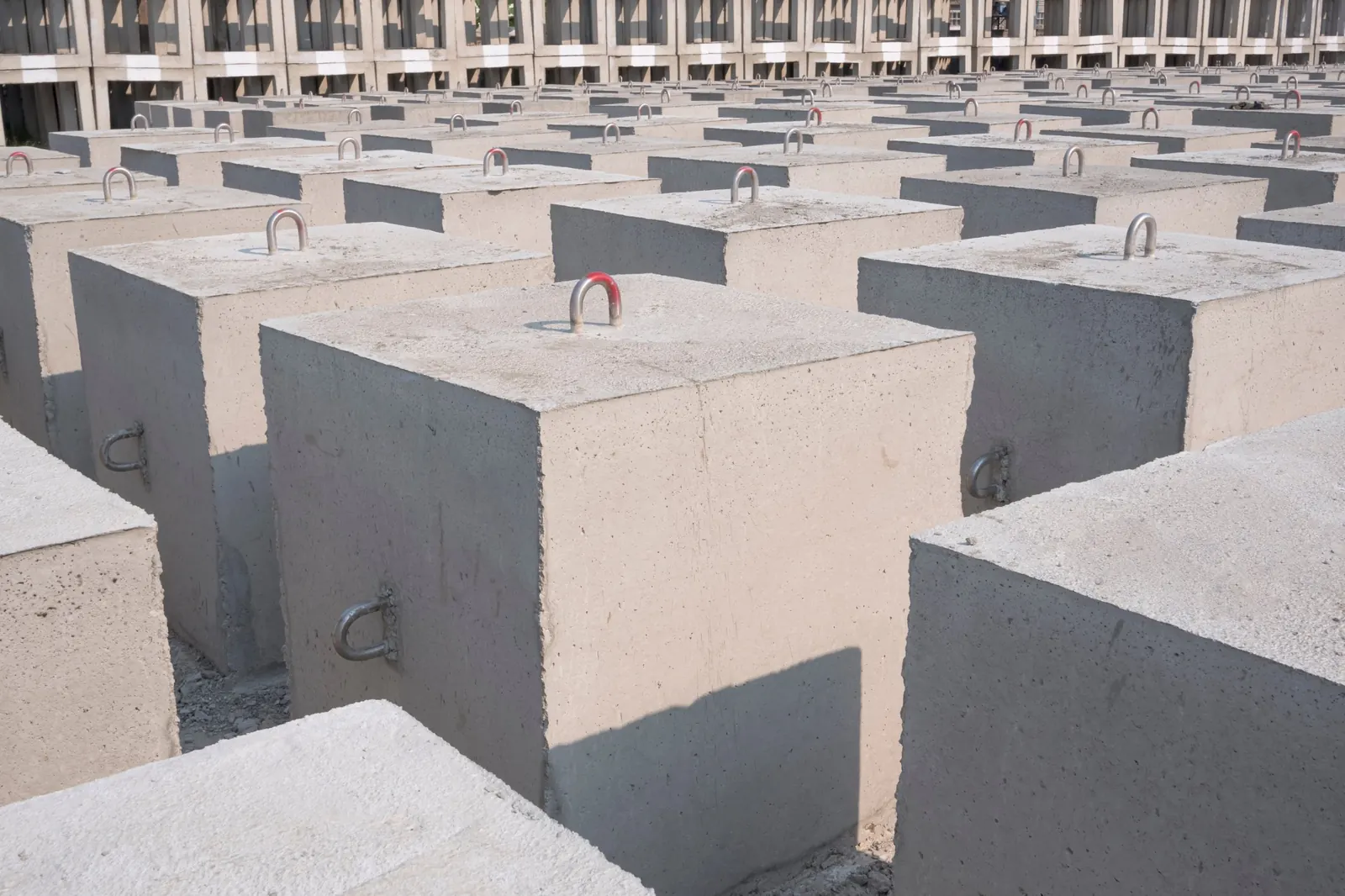
For a boat or buoy to stay at the same spot it has to be held to the seabed. A mooring block does this with its own weight: it sits on the bottom, and a chain runs from the connection ring on top to the boat or buoy.
Unlike an anchor it does not dig into the bottom. Its holding power comes mostly from the block’s weight and the friction between block and seabed.
What decides the size of the block?
Block weight and size cannot be tied to a single rule. These factors are weighed together:
- The size of the boat and the force on the connection in wind or waves
- The type (sand, mud, rock) and slope of the seabed
- Water depth and the length of chain to be used
- Weather and wave conditions in the area
- Whether one boat or several will be attached to the block
That is why single numbers like “a block of this many tonnes is enough” can mislead. The right size comes from a calculation made by looking at the site and the boat.
The formwork and pouring side
Mooring blocks are usually cast in formwork together with the connection ring and reinforcement. The ring is set so it grips firmly in the concrete and is chosen from a corrosion-resistant material.
Because the blocks stay in contact with seawater, the concrete class, cover and curing are set for coastal conditions. For details see our article on concrete in coastal structures.
What information is needed for a quote?
The location of the marina or bay, the size and number of boats, information on water depth and seabed, and an engineering drawing if there is one are enough. We complete the missing information together at the site visit. You can look at our formwork concrete service or request a quote.